First priority
Immediate safety and medical care
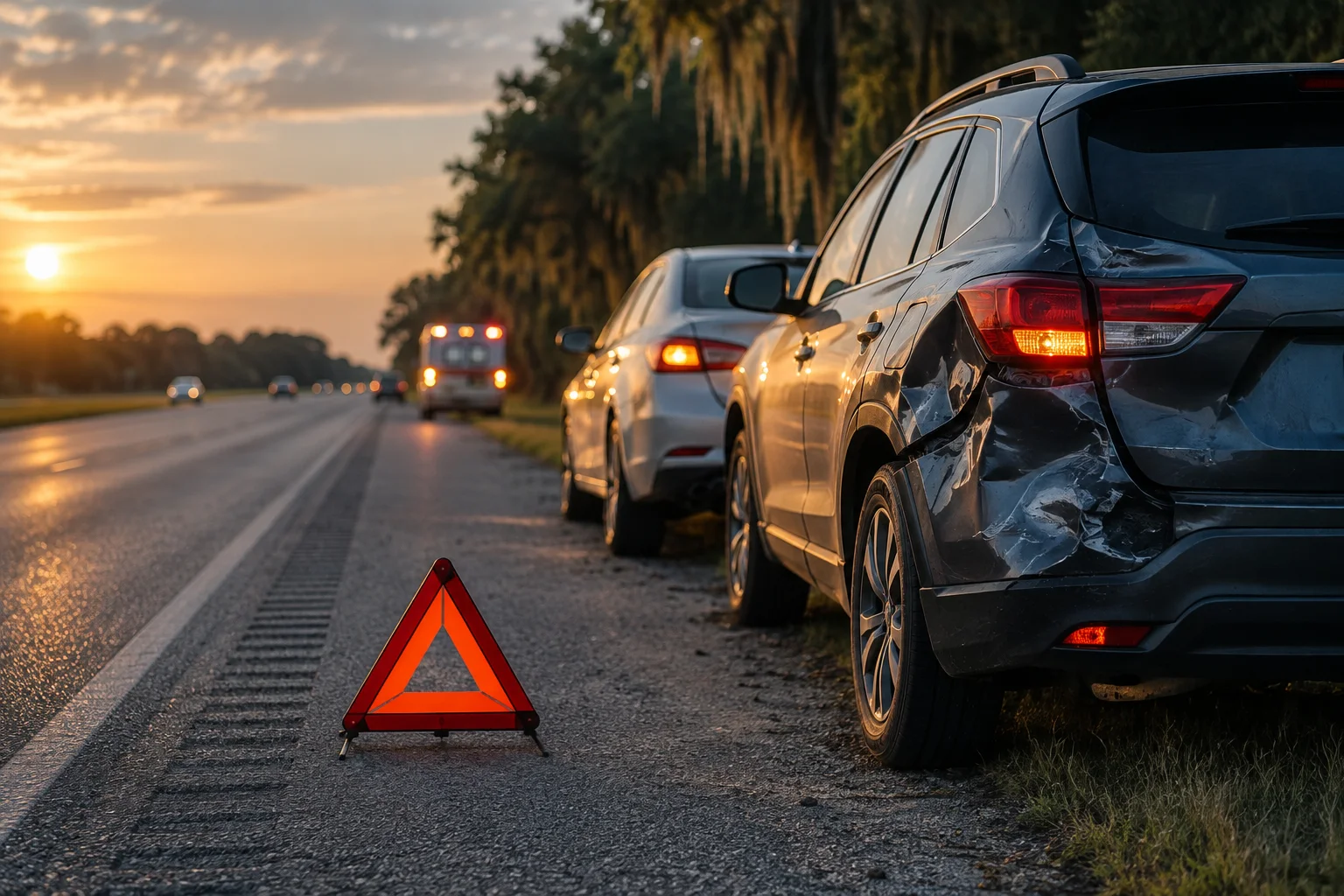
Call 911. Get medical attention for injuries, and move to a safer location only when it is possible to do so without creating another danger.

After a Crash
A car accident lawyer starts with safety, then the records that still exist. Document what you can, and avoid guessing about facts you do not know.
First priority
Call 911. Get medical attention for injuries, and move to a safer location only when it is possible to do so without creating another danger.
When it is safe
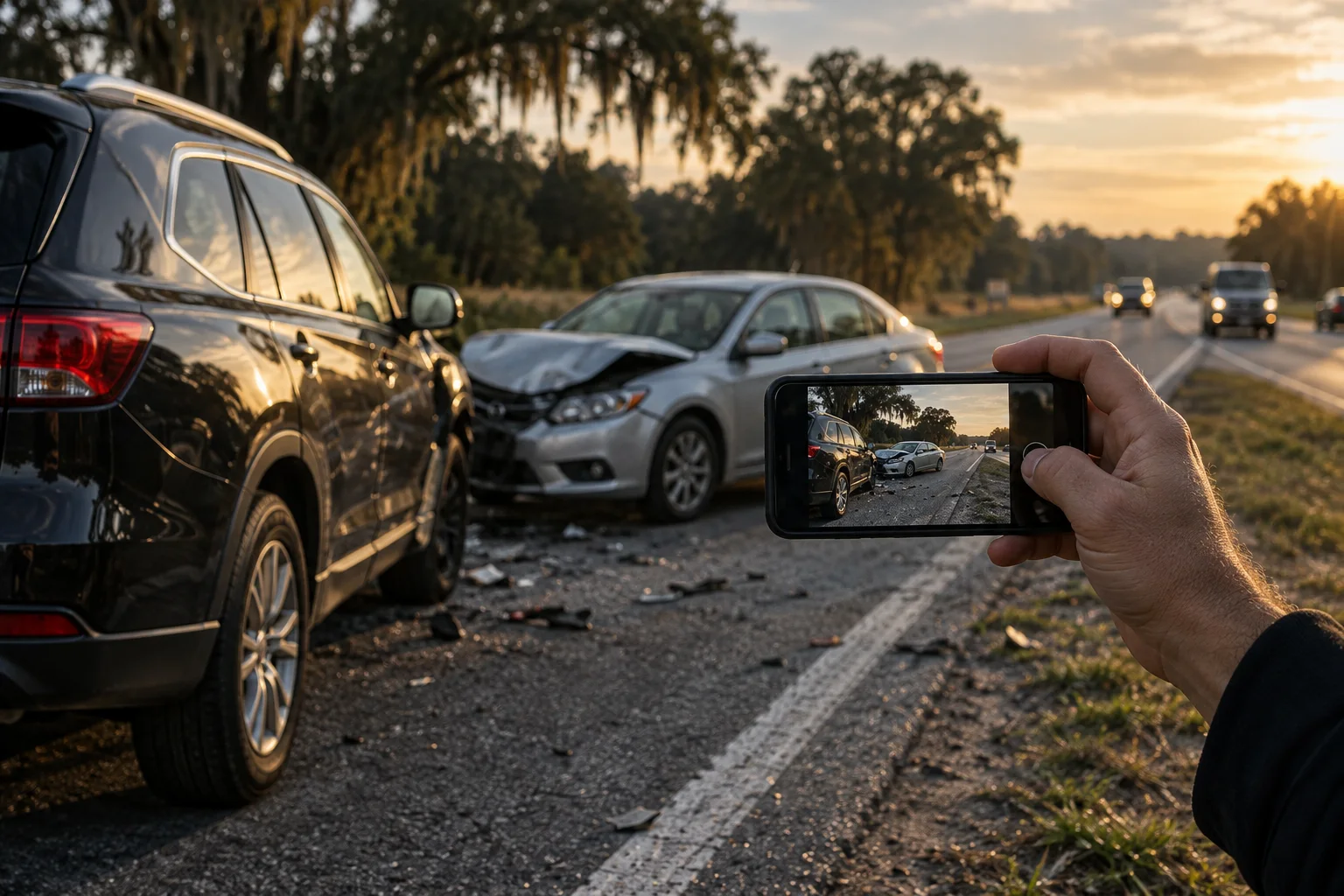
Photograph the vehicles, the road, and visible injuries. Get the names and contact information of the other driver and any witnesses.
As the record develops
Report the crash to your insurer. Consider speaking with a Georgia car-accident attorney before making detailed statements or accepting a final resolution.
Responsibility usually emerges from several sources considered together. The roadway, driver conduct, physical evidence, witness accounts, and documented losses may each add a different part of the picture.

Speeding, aggressive lane changes, distracted or impaired driving, tailgating, and failure to yield are among the behaviors that may contribute to a collision.

Crashes may occur on Interstate 75, U.S. 41, Baytree Road, and other local routes. Traffic controls, sight lines, weather, debris, and vehicle positions can provide important context.
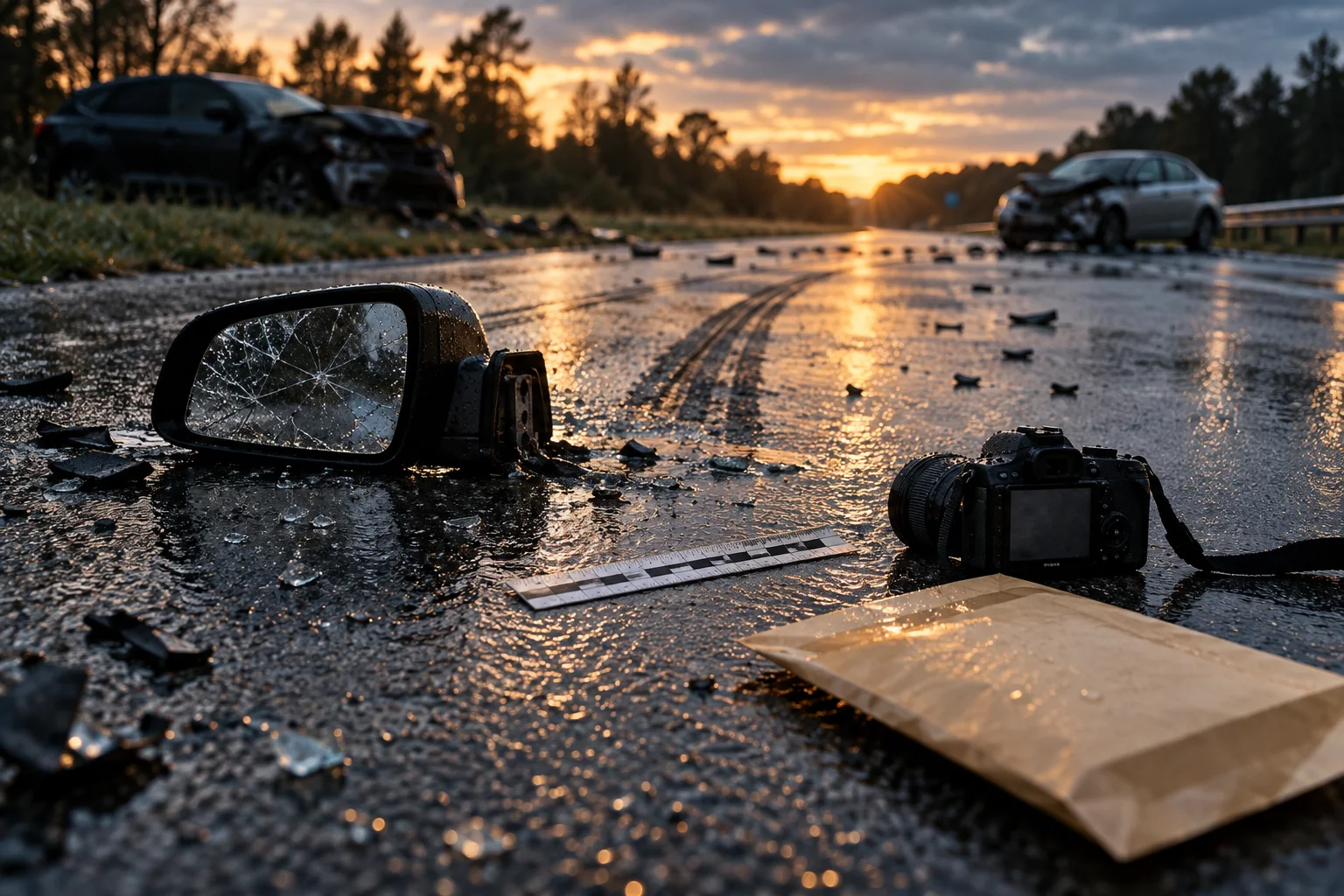
Vehicle damage, photographs, available video, crash reports, phone or event data when lawfully available, and independent witness accounts may help test competing descriptions.

Medical records, bills, repair information, time away from work, and other records may show how the collision affected a person over time.
No single fact automatically decides every collision. The relevance and availability of evidence depend on the circumstances, and this framework does not determine fault.
Terms You May Hear
Plain-English orientation for common words used in Georgia motor-vehicle claims. The exact policy language, available evidence, and current law control in an individual matter.

Coverage that may respond to covered harm a policyholder is legally responsible for causing, subject to the policy terms and limits.
No two matters follow an identical route. This six-part working model shows how safety, records, insurance, and legal choices can move from the immediate response toward resolution or litigation.
Free Case ConsultationCall 911, seek emergency help when needed, exchange required information, and make the appropriate crash and insurance reports.
Have qualified medical professionals evaluate injuries and follow their guidance. Describe symptoms accurately and keep related records.
Keep photographs, report details, witness contacts, insurer communications, vehicle records, and other materials connected to the collision.
Compare the available evidence, identify factual gaps, and examine applicable liability and uninsured or underinsured motorist coverage.
When appropriate, organize responsibility, injuries, losses, and supporting records into a documented request for resolution.
Evaluate available resolution terms or determine whether filing and pursuing a lawsuit is an appropriate next step.
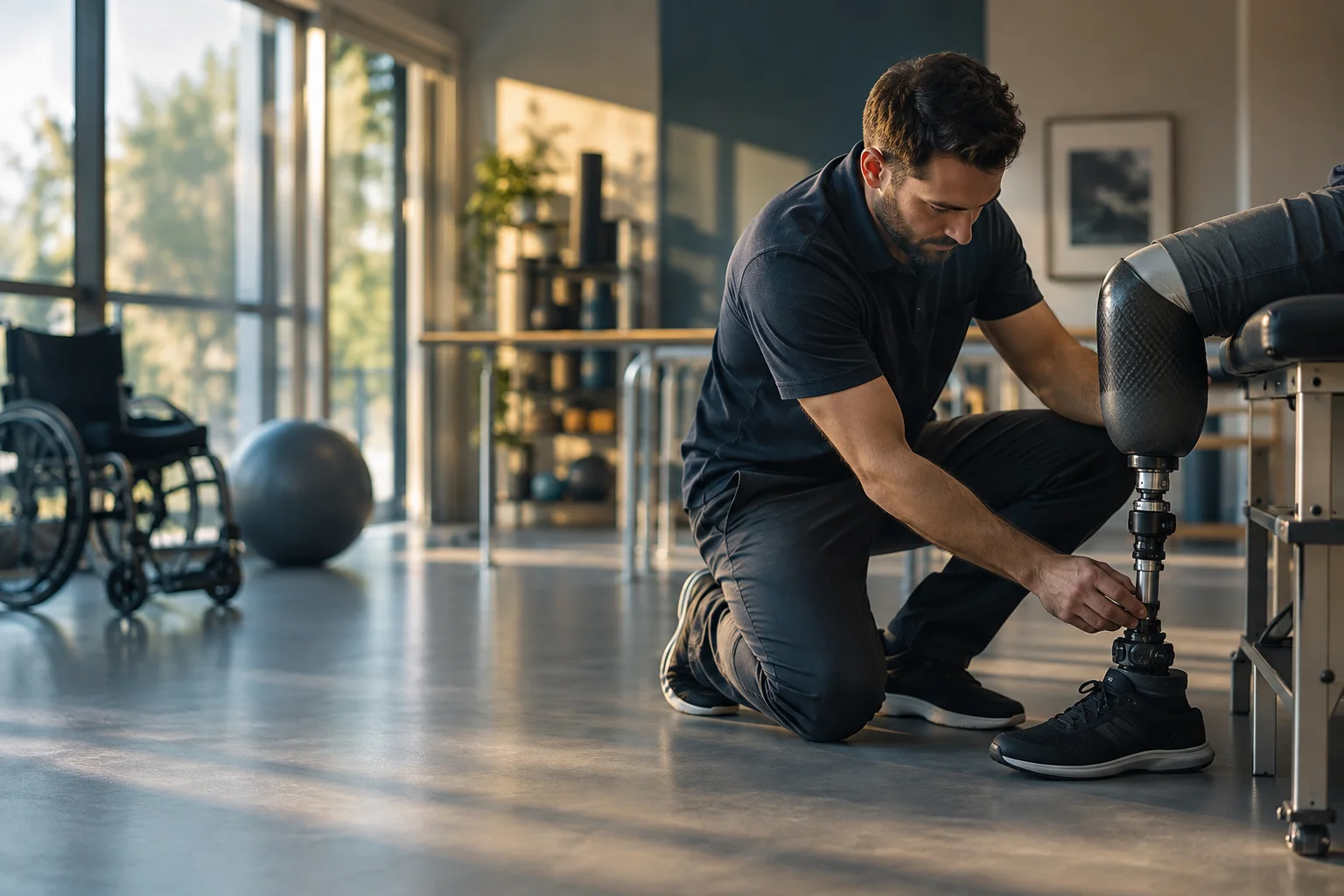
Explore related practice areas that may overlap with serious injuries, lasting impairment, or a fatal crash.
Explore Practice AreasJody D. Peterman, LLC represents clients across Georgia in personal injury and criminal defense matters.
Personal Injury: 40 services



































General information for common first questions. Individual rights, deadlines, insurance obligations, and available claims depend on the facts and current Georgia law.
Free Case ConsultationCall 911, get medical attention, and move out of immediate danger if it is safe. Photograph the vehicles, roadway, and visible injuries; exchange information; get witness contacts; and report the crash to your insurer.
A report may document observations and information gathered at the scene, but it does not automatically decide every civil responsibility question. Physical, digital, and witness evidence may also matter.
Georgia law generally reduces damages according to a claimant’s share of fault when that share is 49% or less. A claimant who is 50% or more at fault cannot recover in that claim.
Photographs, available video, vehicle damage, roadway conditions, witness contacts, crash reports, policy information, and insurer communications may all be useful. Preserve original files when possible.
Insurers may request statements for different reasons. Understand who is asking, which policy is involved, and what obligations apply before responding. Do not guess or speculate.
Your own uninsured or underinsured motorist coverage may be relevant, depending on the policies in effect and the circumstances. Georgia requires liability insurance, but coverage disputes and uninsured drivers still occur.
Medical decisions belong with qualified health professionals. Some symptoms can change over time, so do not delay appropriate care merely because the vehicle damage or initial discomfort seems modest.
Keep medical records and bills, repair estimates, receipts, work-related records, mileage or travel documentation, and communications about the collision. Organized records can help show the documented impact.
There is no universal timeline. Treatment, investigation, disputed responsibility, insurance questions, the number of parties, negotiation, and litigation can all affect duration.
Consider seeking advice promptly when injuries, disputed responsibility, multiple parties, insurance questions, or possible deadlines are involved. An initial inquiry does not guarantee representation or any outcome.